
Death Valley Super Bloom 2026
Proof That Nature Is Never Truly Barren
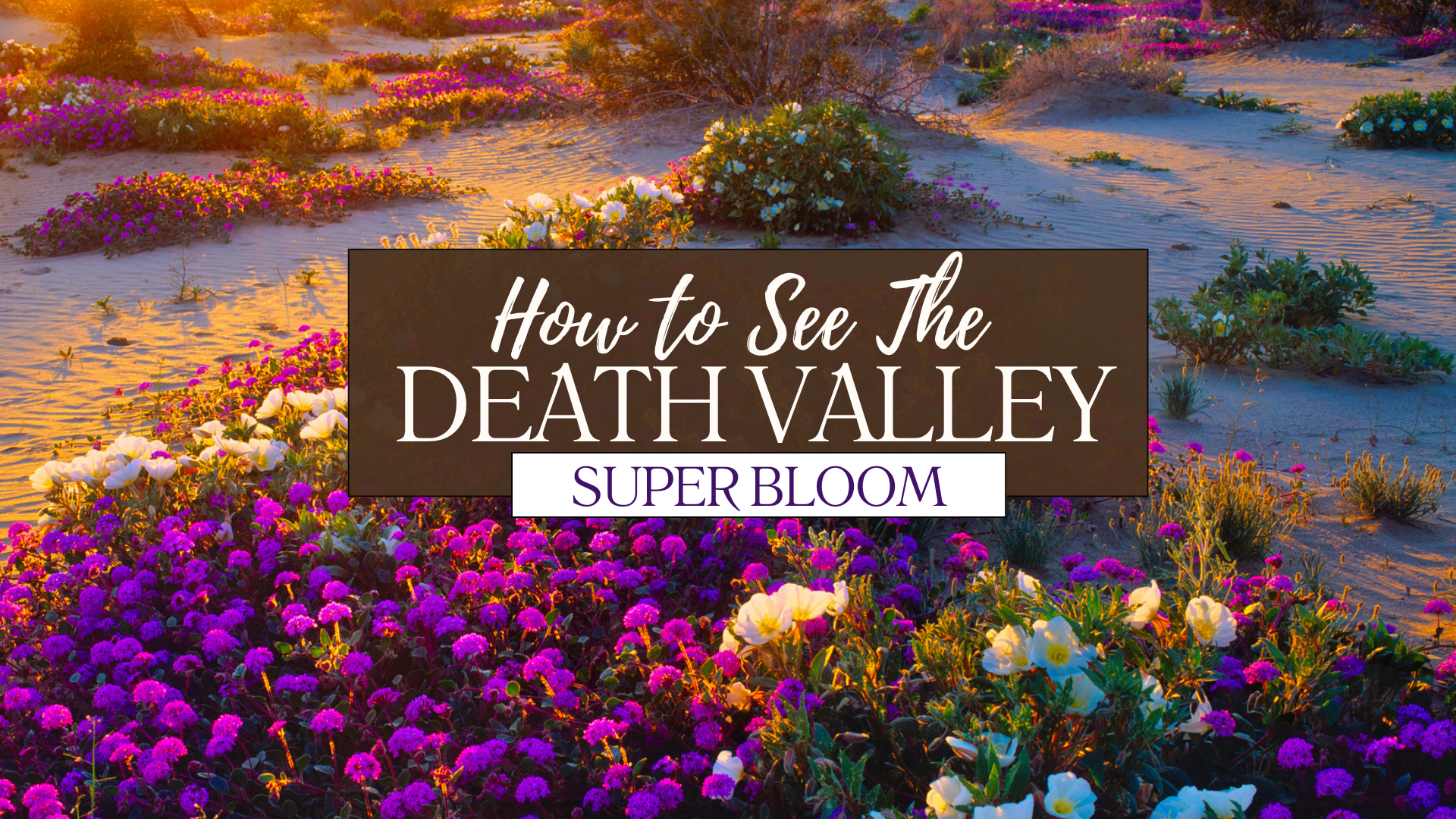
Death Valley is a land of incredible extremes known for strange phenomenon - mysterious “sailing” stones weighing tens to hundreds of pounds that move when no one is watching, hillsides painted in unworldly shades of pink and green, a crater that wasn’t formed by lava, a fish living in water 4 to 5 times saltier than the ocean, and sand dunes that sing.
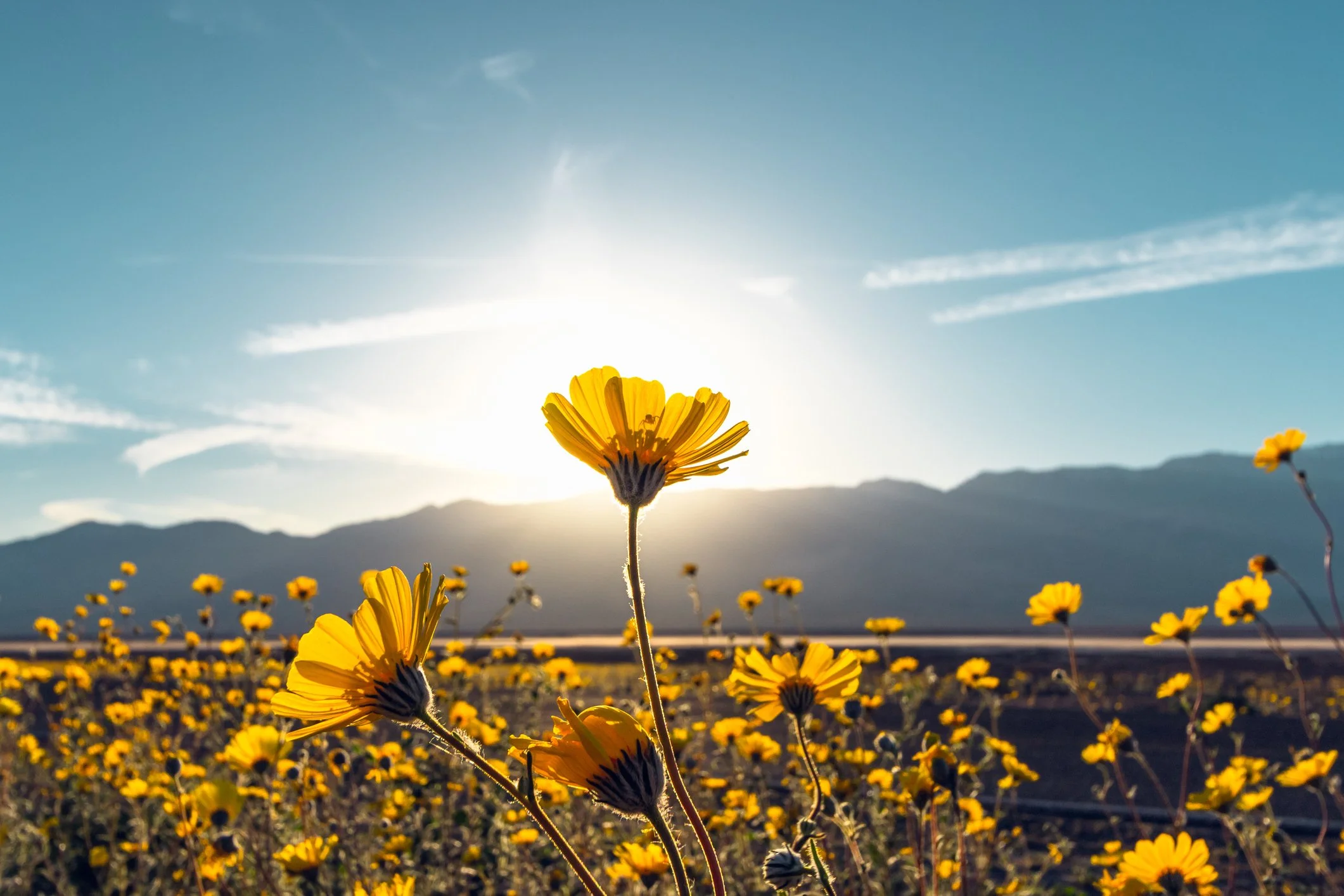
Now, once again, the desert is performing its rarest magic - wildflowers are blooming. Even more incredible, it looks like it will become a super bloom. Every five to ten years or so, the dry, desolate desert floor somehow magically comes to life in a genuine SUPER bloom of vibrant wildflowers flourishing where nothing should be able to grow. This guide will take you through what a super bloom is, why it happens, and how to catch a rare glimpse of it.
Don’t miss your chance to see it. They never last long.
👉 Planning a visit? Get my full guide to visiting Death Valley with tips to make the most of your visit and the best things to see and do.
Table of Contents
When to See the Wildflowers in Death Valley
The best time to see wildflowers in Death Valley is usually mid-February through early April, with the peak typically happening in March. The timing varies each year depending on how much rain there was in the winter months and temperatures. In years with steady heavy rain, lower elevations can start to bloom as early as February, carpeting the desert floor with desert gold, sand verbena, and primrose. Higher elevations tend to bloom later - usually in April, and sometimes even into May.
True “super blooms” only happen once every five to ten years. They are extremely rare, only occuring in years with very heavy rainfall. What’s exciting is that 2026 is shaping up to be one of those years and perhaps the first significant super bloom since 2016.
The Death Valley 2026 wildflower bloom is already underway and experts and park officials are predicing a “super bloom.” Although the exact timing of a “peak” can’t ever be predicted and there is no guarantee it will happen, conditions are promising that Death Valley may put on an extraordinary display very soon! So pack your bags quick.
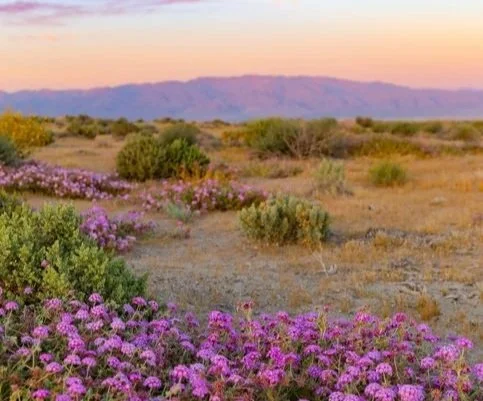
Best Time for Wildflowers: Mid-February through April
Peak bloom: Typically March–April at lower elevations
Higher elevations: April through June
Bloom timing depends on rainfall and temperatures
Where to See Wildflowers in Death Valley
The best places to see wildflowers in bloom are at lower elevation along Badwater Road near Furnace Creek and stretches of Highway 190. While blooms can appear throughout the park, they’re usually the most vibrant here.
Here are all of the best viewing spots and what you can expect to see:
• Badwater Road & Badwater Basin — Desert gold and primrose
• Highway 190 (Stovepipe Wells to Furnace Creek) — Colorful roadside blooms
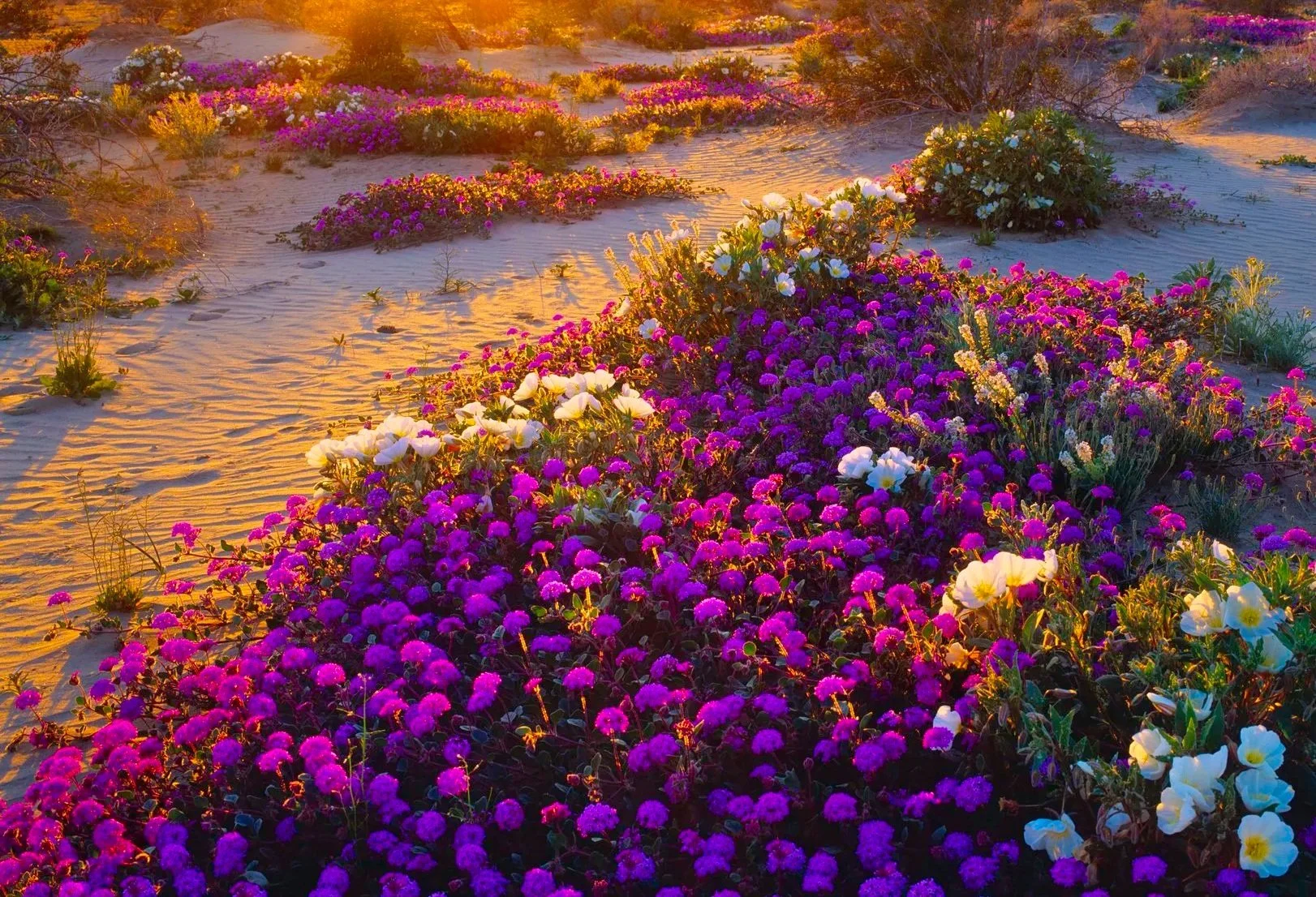
South Badwater Road near Ashford Mill — Sand verbena and desert gold
Artist’s Drive, Panamint foothills & Titus Canyon — Scenic hillsides with blooms
Many of the best displays are visible from paved roads and designated pullouts, making it easy to enjoy the blooms without hiking. This also makes them easily accessible for those who prefer or need to stay close to their vehicle.
What Causes a Super Bloom?
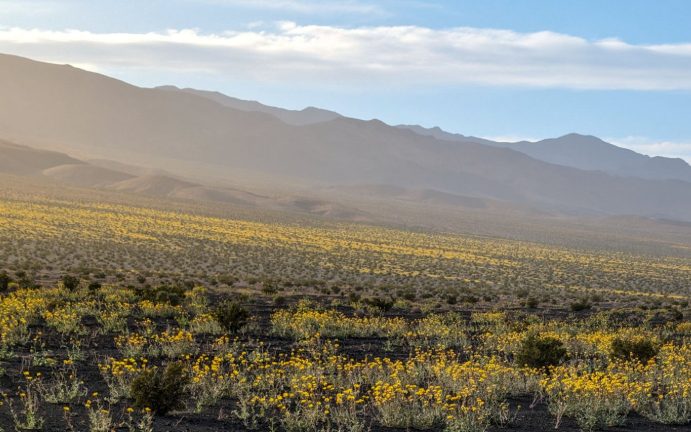
Superblooms only happen every 5 to 10 years. They are extremely rare and the timing depends almost entirely on winter rain. But it’s not just about water. It’s a trifecta of rainfall, warmth, and calm winds that make them appear.
A super bloom can only happen when significant rainfall soaks the desert soil, triggering the dormant wildflower seeds to germinate. From there, the conditions have to stay just right - enough warmth to help them grow but mild winds, since these delicate plants rely on shallow surface moisture that can evaporate quickly with persistent heavy wind. Seeds can lie dormant for years waiting for that perfect mix of moisture and warmth. However, when everything aligns, the desert doesn’t just bloom, It explodes into widespread color.
Tips for Seeing the Death Valley Super Bloom
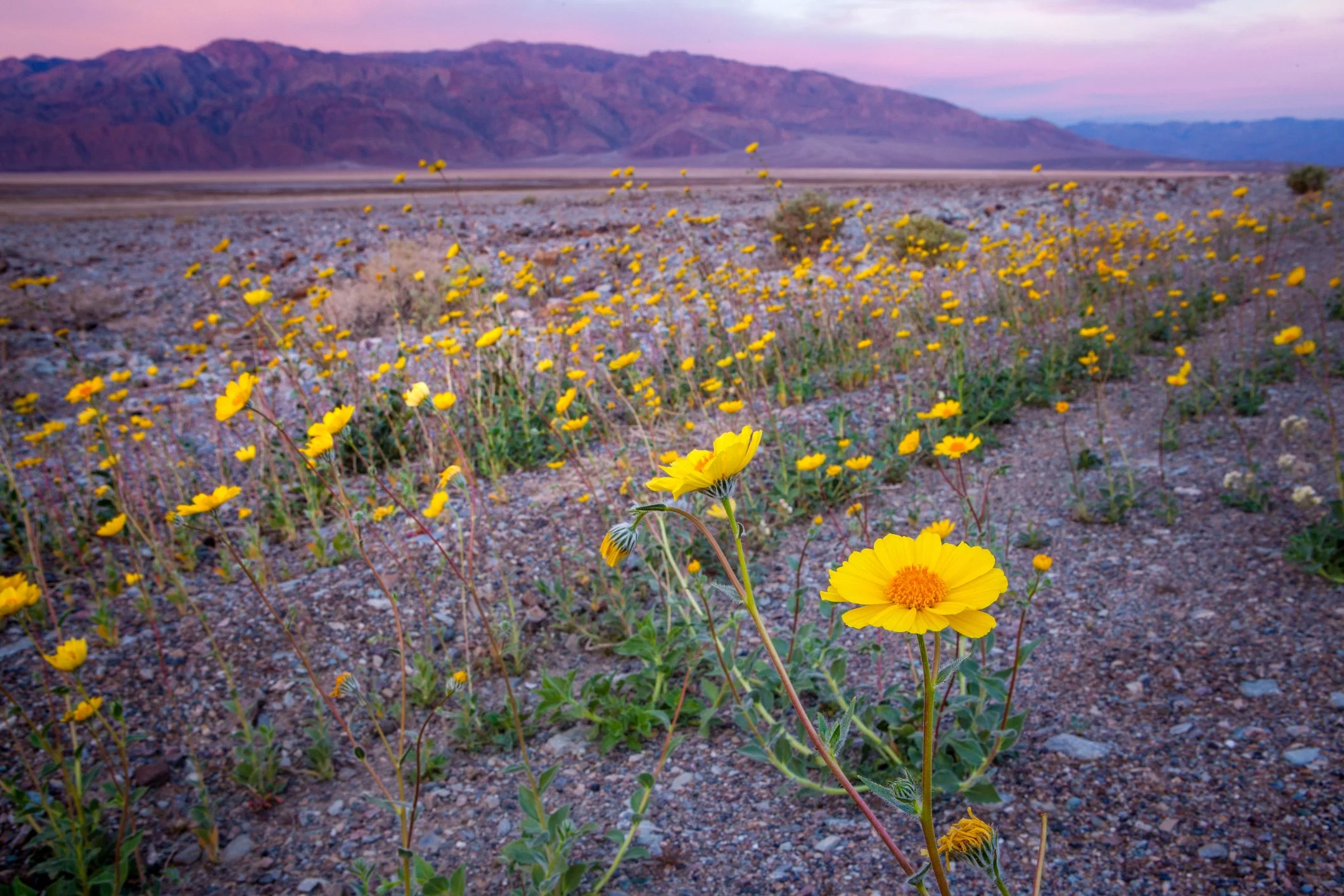
Check the lower elevation first. Blooms start here.
The best place to see the super bloom is along Badwater Road near Furnace Creek and sections of Highway 190.
The best lighting is in the morning or late afternoon.
Use low angles for photos so flowers appear endless.
Bring plenty of water and sunscreen. Sunburn can happen in the desert even in spring and it’s very dry.
Go in the middle of the week to avoid larger crowds.
Book lodging early. Hotels and campsites fill quickly during the blooming season.
If you can’t find camping at Furnace Creek, try Panamint Springs or Wildrose which are further away but don’t feel up as quickly. There are also designated backcountry sites on roads like Echo Canyon, Cottonwood Canyon, Hole in the Wall, Greenwater Valley, and Marble Canyon but they are primitive and require permits.
Stay on trails and avoid stepping on flowers. It’s illegal to pick them.
Check park updates for bloom conditions.
👉 Get my complete guide to visiting Death Valley for even more tips, planning advice, and insider recommendations.
FAQs for Seeing Death Valley’s Super Bloom
Is 2026 officially a super bloom year?
The Death Valley 2026 wildflower bloom is already underway and park officials think there is a very real possibility of seeing a super bloom.
When was the last major super bloom?
2016 was the last time there was a widely recognized super bloom in Death Valley.
How long does a super bloom last?
Super bloom peaks usually last about 2-3 weeks from the time they start although they can stretch out a couple of weeks longer in years when spring is cool and mild. If temperatures rise or winds pick up, they may only last 1-2 weeks.
Can I pick the flowers?
No. Picking flowers is strictly prohibited and can damage the ability to see future blooms.
Can I see flowers from my car?
Yes, many of the best flower displays are visible from paved roads and designated pullouts, making it easy to enjoy them from your vehicle.
READ MORE CALIFORNIA TRAVEL GUIDES
👉Best Things to Do in Death Valley - A Complete Guide to Visiting
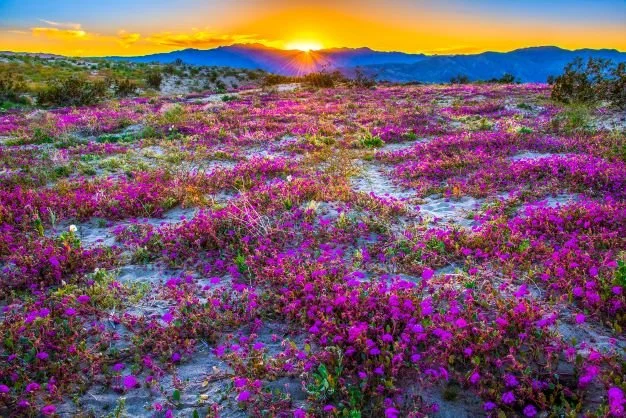
Anza Borrego State Park could also get a “Super Bloom” in 2026: Get my Guide for Visiting Anza-Borrego
Top 5 Things to Do in Inyo County - Gateaway to Death Valley
Photo: Anza-Borrego wildflower bloom, Elliott McGucken