Destinations
Keep a Sense of Scale in a Rome Street Photograph
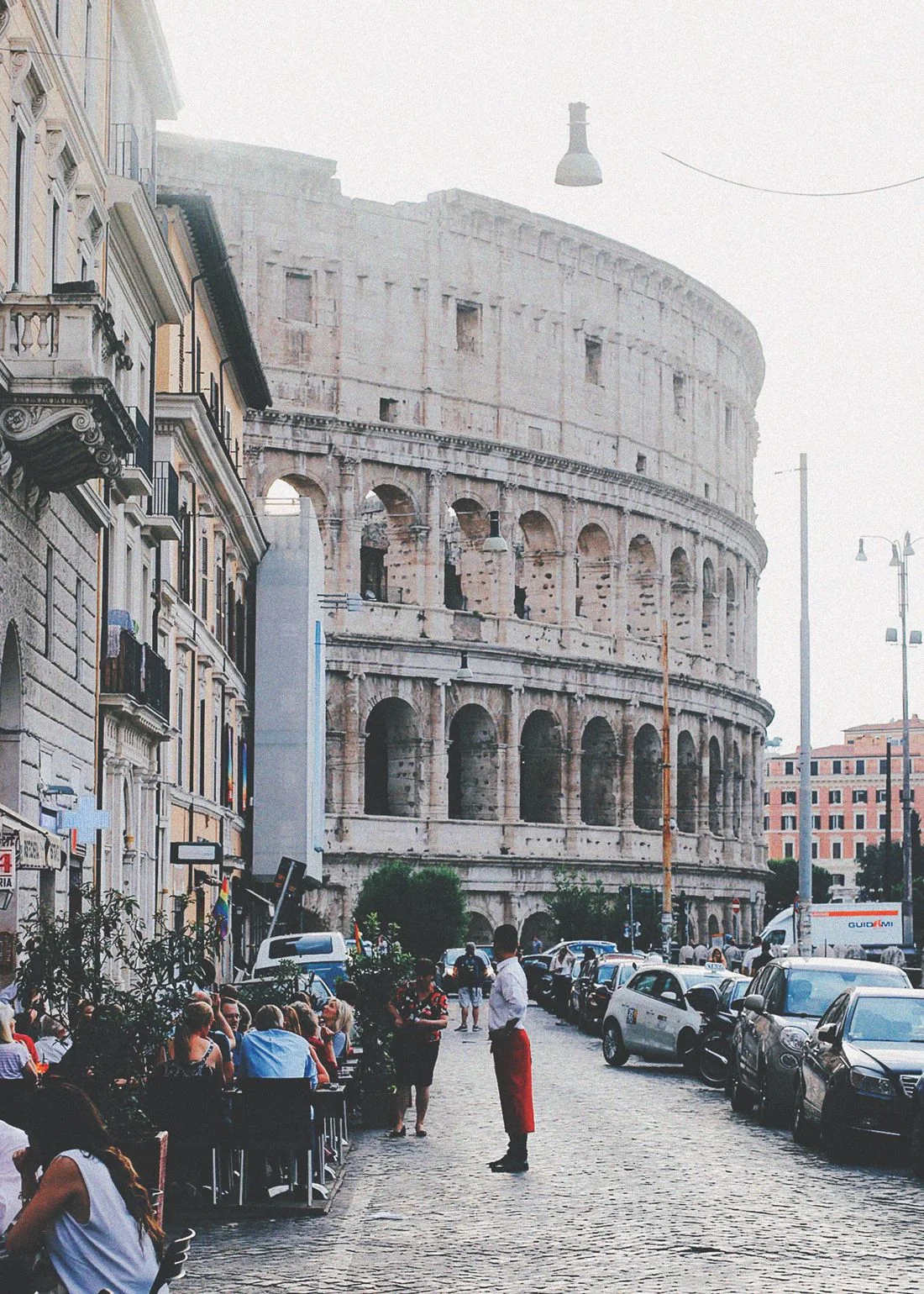
Choose a Rome street photograph through the relationship between a large landmark and its surroundings, working from a permitted position without staging other people.
In this guide
A large landmark can fill a photograph so completely that its size becomes difficult to read. In a Rome street scene, the surrounding buildings, ordinary movement and space around the subject may help explain its scale. Decide which relationship you want to show from a permitted public position. The aim is a clear observation of the place, not a staged scene that requires other people to perform for your image.
Choose the relationship before the frame
Look at the landmark and the visible surroundings. A neighbouring facade can show how the larger form rises beyond the street, while an open foreground can create distance. Choose one relationship that you can comfortably include rather than trying to explain the whole area in a single picture.
Keep factual identification separate from visual interest. You can name a landmark when you can establish what it is, but a photograph does not supply its history or dimensions. Avoid adding impressive-looking details to the caption merely because they seem plausible from the image.
Work from a suitable position
Remain in permitted public areas and follow local instructions. Keep clear of traffic, restricted edges and the routes people need. Do not enter an unsuitable position to make the landmark appear larger or to obtain a more dramatic foreground. The usable viewpoint is part of the actual picture you have the opportunity to make.
If the place is busy, accept the activity as part of the scene or choose a different moment. A public street need not become empty to make a useful photograph. You can compose around broad areas of movement without treating strangers as objects to be positioned.
Compare the frame edges and foreground
Check whether the nearest objects help the sense of scale or merely obscure the subject. A partial sign, a vehicle crossing the frame or a very close figure can draw more attention than you intended. Adjust the camera within your available position before assuming you need to move elsewhere.
Take a small comparison if it helps: one frame with more of the ordinary street and another with less. The wide-and-close canal comparison offers a related method for making a deliberate change instead of repeating an image without knowing why.
Choose the picture that explains your observation
Review the alternatives and ask whether the relationship remains readable at the size you expect to use. A tiny surrounding detail may disappear in a small album image. Keep the frame whose main forms explain the place rather than the one that simply includes the most material.
Add a short accurate location note and the reason you kept it. The skyline album context guide helps connect an image with the actual visit without requiring a long caption.
Then put the camera away and continue considerately. A sense of scale can come from ordinary context, and ordinary context belongs to a living place. The photograph has done its job when it makes the relationship you noticed understandable without turning the street into a set arranged around your visit.
TAKE THE NEXT STEP
Useful resources & shopping
Check current availability, specifications and conditions directly. These are untracked editorial links; inclusion does not imply a partnership.
Sources & editorial notes
Official resources checked 2026-10-28. Rules and availability can change; confirm before booking. Last updated: 2021-11-01. This guide does not claim a personal visit or hands-on product test.
Have a correction? Contact the editorial team.