Travel Essentials
A refillable travel bottle that fits your day bag and your routine
Compare insulated and lightweight refillable bottles for daily travel, with practical checks for cleaning, lid design, bag fit and refill planning.
In this guide
The best bottle is the one you carry
A large bottle looks reassuring until it competes with your jacket, groceries, and camera in a small daypack. A tiny bottle is easy to carry but less useful when the next refill is inconvenient. Begin with a normal day: how far you walk, where you can obtain suitable drinking water, and whether you return to the accommodation between outings.
Do not choose capacity from a general travel photograph. Fill the bottle you already have, put it into your day bag, and walk with your expected load. The experience may show that you need a narrower shape, a simpler lid, or less weight rather than a larger advertised capacity.
Insulated and lightweight bottles solve different problems
An insulated bottle can be appealing when keeping a drink cool is important to you. Hydro Flask's travel bottle range provides a real example to research. The official 24 oz Wide Mouth Travel Bottle with Flex Straw Cap page describes an insulated design with a straw cap. Check the current product details and care instructions for the exact model and lid.
Nalgene's wide-mouth range offers another official starting point when a straightforward reusable bottle suits your routine. These are examples of different approaches, not results from a temperature or leak test. We have not measured how either product performs in a day bag. Your choice should account for filled weight, fit, cleaning access, and how you prefer to drink.
The lid matters as much as the body
A straw lid can be convenient when you stop briefly during a walk, while a screw cap may appeal if you prefer fewer parts to manage. Look closely at hinges, seals, and removable pieces. Consider whether you can clean and dry them using the tools available during the trip, especially when staying in small rooms without a kitchen.
Read the manufacturer's statements about closed-lid transport and the liquids permitted. Do not assume every product in a brand's range is appropriate for hot drinks or can lie sideways beside electronics. Try the bottle upright in your bag's pocket before relying on it. Treat a separate protective packing arrangement as sensible when a leak would damage expensive equipment.
Match the shape to the places it will go
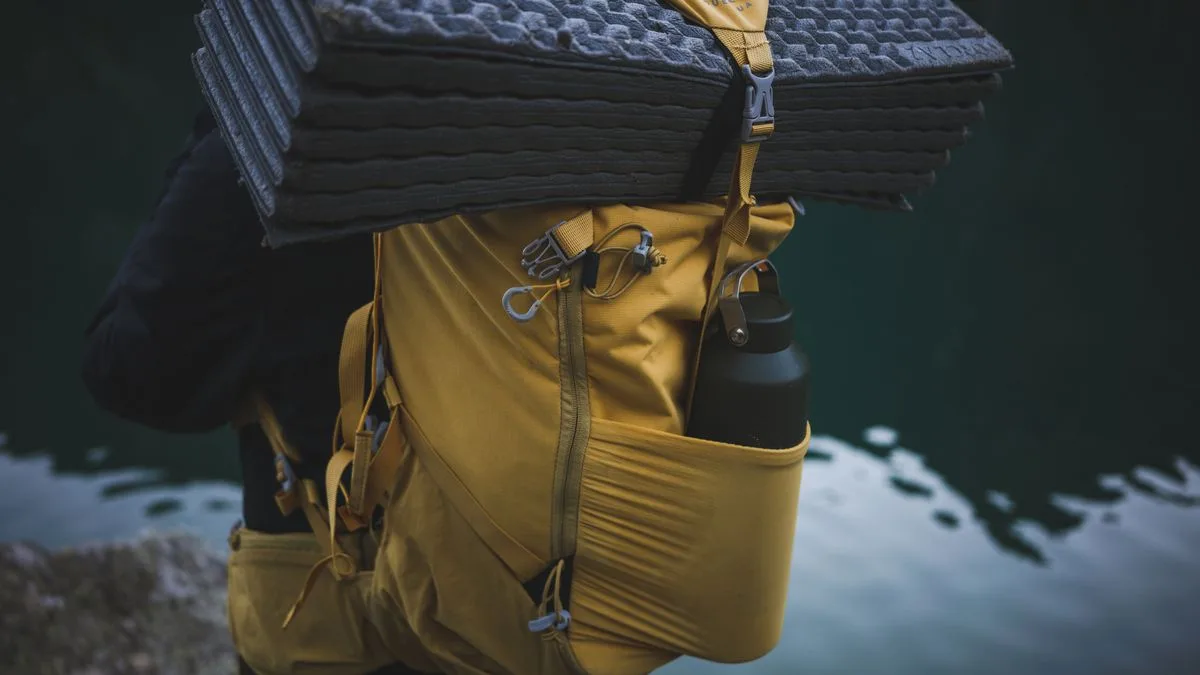
Measure your daypack's side pocket and check whether the bottle can be removed without taking off the whole bag. A broad body may be easy to clean but awkward in a narrow pocket. If your itinerary includes driving, cupholder fit can matter. If you will mainly use trains and walk, weight and a secure place in the bag may matter more.
For a shared family bag, consider several manageable bottles rather than one enormous container that is inconvenient to pass around. Label similar bottles so that everyone can keep track of their own. A handle or loop is useful only if it helps your normal routine; hanging a heavy bottle where it swings against you can become irritating.
Plan refills and cleaning realistically
A refillable bottle is a container, not a water-treatment system. Establish where you can obtain suitable drinking water for the destination and follow local guidance. Do not infer water safety from a decorative fountain or the presence of a tap. An accommodation can often explain the practical options available nearby.
Wash the bottle according to its official care instructions, including the lid components, and let it dry properly. Water alone is simpler to manage than sweet drinks that leave residue. For flights, check the current airport security rules and empty or prepare the bottle as required before screening. Make the refill step part of the departure routine rather than leaving it until you are rushing to a gate.
Frequently asked questions
Should you buy an insulated bottle for every trip? Only if temperature retention matters enough to justify the additional bulk and weight in your own kit. Can a bottle replace a thermos? Read the exact product's permitted-liquid and lid guidance; similar shapes do not establish equivalent uses.
What is worth paying extra for? A shape that fits your bag, accessible replacement components, and a lid you can maintain may be more useful than a limited color. What should you check before ordering? The full product dimensions, the intended cap, cleaning guidance, and the retailer's return policy. A bottle that works at home as well as abroad is often the more economical purchase.
Compare the choices
| Choice | Useful scenario | Tradeoff |
|---|---|---|
| Insulated bottle | Temperature matters | Additional bulk and weight |
| Lightweight bottle | Frequent refills | Less temperature control |
| Straw cap | Quick drinking stops | More parts to clean |
TAKE THE NEXT STEP
Useful resources & shopping
Check current availability, specifications and conditions directly. These are untracked editorial links; inclusion does not imply a partnership.
Research the current insulated bottle and cap.
Compare official reusable bottle shapes and capacities.
Sources & editorial notes
Official resources checked 2026-10-10. Rules and availability can change; confirm before booking. Last updated: 2026-07-20. This guide does not claim a personal visit or hands-on product test.
Have a correction? Contact the editorial team.