Travel Essentials
Check Suitcase Handle Height Through an Ordinary Walk
A suitcase handle can offer several adjustment positions without any one of them feeling comfortable in your hand. Test the handle with a representative load through ordinary
In this guide
A suitcase handle can offer several adjustment positions without any one of them feeling comfortable in your hand. Test the handle with a representative load through ordinary movement before choosing a case. The useful setting depends on the equipment's design, your own body and the route, rather than the number of clicks listed in a product description.
Understand the intended operation
Read the maker's instructions for extending, securing and retracting the handle. Check which fittings are designed for lifting and which for pulling or steering. Do not assume a telescopic handle can be used for every task simply because it is the easiest part to reach.
Inspect the mechanism's condition and ask the seller or maker about any uncertainty. A display case may have been handled repeatedly, while your existing luggage may have a fault needing appropriate repair. Avoid forcing a sticking mechanism as a way to decide whether the design suits you.
Try the actual walking position
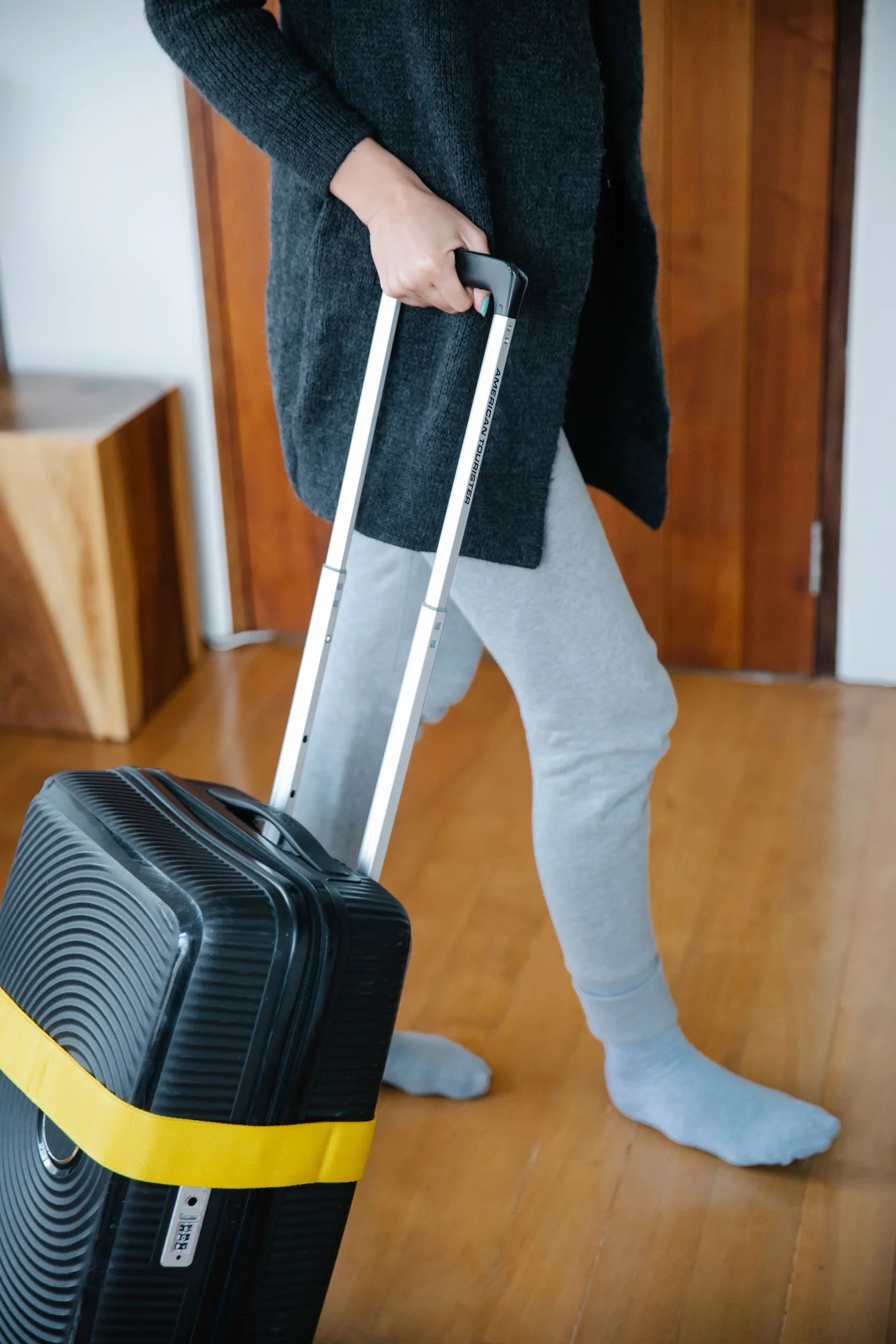
Use an appropriate representative load within the case's intended limits and move through a suitable clear area. Adjust the handle only as instructed, then walk naturally. Notice whether you lift one shoulder, reach awkwardly or repeatedly change your grip. Keep the trial comfortable and stop if the arrangement feels unsuitable.
The backpack or suitcase comparison helps keep the whole route in view. A handle trial on a smooth floor does not establish suitability for every surface. Consider the actual transfers and your own access needs before deciding which luggage format to use.
Add the second carried item
Try the day bag in its intended carrying position, without overloading either piece or attaching equipment in an unsuitable way. Check whether you can manage both while opening a door or stopping to retrieve a document. A comfortable handle position may become awkward when the other hand has a different job.
The comfortable daypack guide can help reduce the supporting load. Do not choose an uncomfortable suitcase setting merely to compensate for a bag that carries too much. Assess each piece and the interaction separately.
Include stopping and storage
Practise bringing the case to a controlled stop and retracting the handle according to its design. Check whether the operation is manageable with the belongings you normally carry. Keep fingers, straps and loose clothing clear of the mechanism as instructed, and leave the case stable in a suitable position.
Should you buy the case with the most adjustment levels? More options are useful only if they provide a suitable working position and a reliable intended operation. Compare the actual feel, condition, repair support and complete route. A clear movement trial can reveal more about daily use than counting handle settings on a specification sheet.
If comparing two cases in a shop, use the same walking route and representative load where permitted. That makes the difference easier to judge than switching between unrelated empty display positions.
TAKE THE NEXT STEP
Useful resources & shopping
Check current availability, specifications and conditions directly. These are untracked editorial links; inclusion does not imply a partnership.
Sources & editorial notes
Official resources checked 2026-10-15. Rules and availability can change; confirm before booking. Last updated: 2023-11-12. This guide does not claim a personal visit or hands-on product test.
Have a correction? Contact the editorial team.